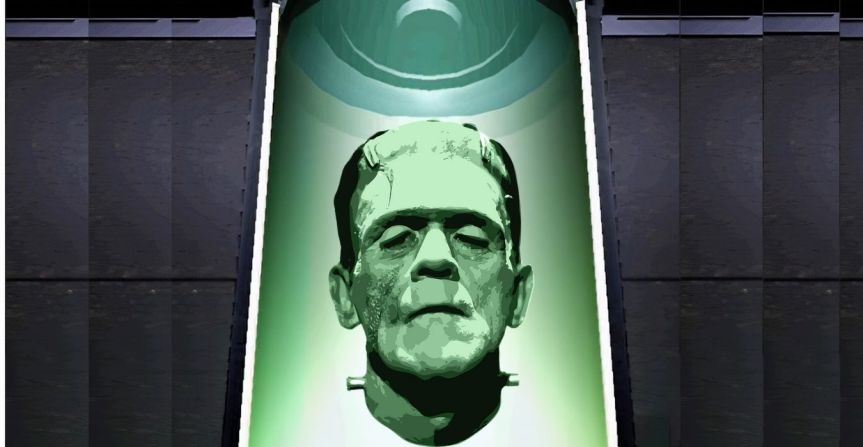
This is the #1 entry in the Resident Evil and Frankenstein series on the blog and contains spoilers to all Resident Evil lore and Mary Shelley’s Frankenstein; Or, the Modern Prometheus.
“Life and death appeared to me ideal bounds, which I should first break through, and pour a torrent of light into our dark world. A new species would bless me as its creator and source; many happy and excellent natures would owe their being to me”. P.40.
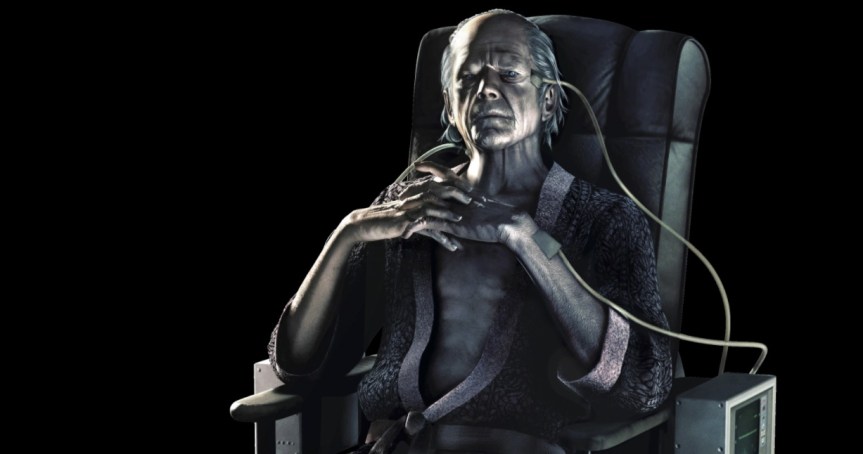
Ozwell E. Spencer wanted to create a new “race” of human beings, forcing the evolution of the species through viruses. In his view these beings would be superior to others; they would be stronger and more intelligent – and should see him as their leader, a god of the new species. It wasn’t him, however, who said the above-quoted words. It was none other than Victor Frankenstein in the brilliant work that inaugurated the sci-fi genre, one of which Resident Evil belongs to.
Frankenstein; Or, the Modern Prometheus, first published by English writer Mary Shelley in 1818 and reedited in 1831, influences science fiction still to this day. And, albeit indirectly, Resident Evil was not left out. The franchise has an immense number of ‘mad’ scientists with objectives similar to Victor’s – almost all of them, by the way.
And since I love both Frankenstein and Resident Evil, this text, which was going to be a standalone, will be the first in the Resident Evil and Frankenstein series that will discuss various aspects of how we can connect the two stories.
Frankenstein‘s (Hi)Story and Criticism
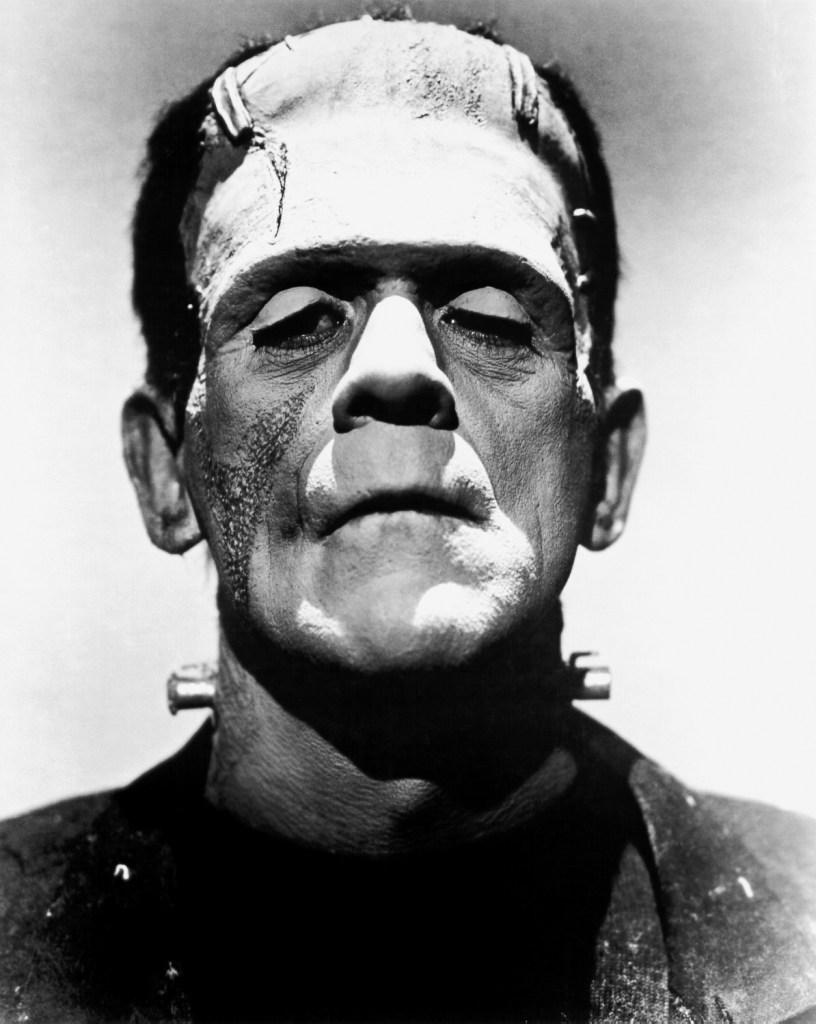
Even though in common sense we are familiar with the excerpt in which Victor builds and gives life to the creature, not everyone knows that this is not the main part of the work, but only its beginning. During most of the book, we see the scientist going mad and suffering the consequences of his deed, while, at the same time, we follow the journey of the Creature, who acquires consciousness, realizing that it will never be accepted by people and thus resenting the rejection by its creator.
Frankenstein is a story that makes numerous criticisms about the society of its time, including the author’s own husband, poet Percy Shelley. Among them, we can highlight Mary Shelley’s criticism of the way men (really men, not humanity) saw nature and how this affected their way of doing science. For the writer, science should be about understanding nature without radically altering it and, above all, without willing to dominate it.
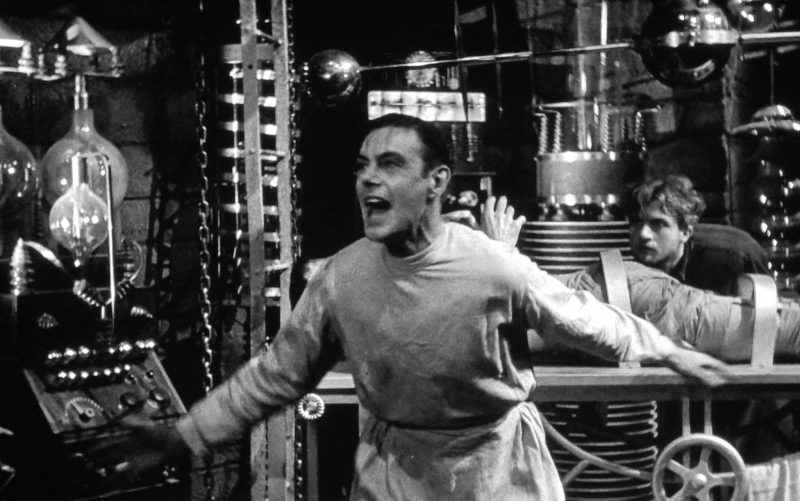
“It’s alive!”: the moment when Victor (in this version called Henry) Frankenstein realizes that the Creature is alive. Scene from the 1931 film Frankenstein.
The reason behind this is that there was a very strong view in the 18th and 19th centuries (and which in many ways remains to this day) that human beings are above nature, as if they weren’t part of it with all its strengths, but also its weaknesses. As a result, many scientists at the time thought that there were no limits to the science they could practice, including no ethical barriers, to the point of even trying to reverse the most inevitable of nature’s rules: death.
Well, this is exactly what Victor Frankenstein does – he discovers the principle of life and thus tries to circumvent death by creating a new being. For the connoisseur, it’s pretty clear how this relates to several of Resident Evil’s villains and their monstrous creations.
Cheating nature
In Resident Evil, creatures are, in general, the result of experiments with animals or living human beings infected by some organism, virus, parasite or fungus. The goal is not exactly bringing the dead back to life; this happened incidentally through T-virus infection. In any case, Umbrella strongly violated the rules of nature, as did Dr. Frankenstein, in creating new species.
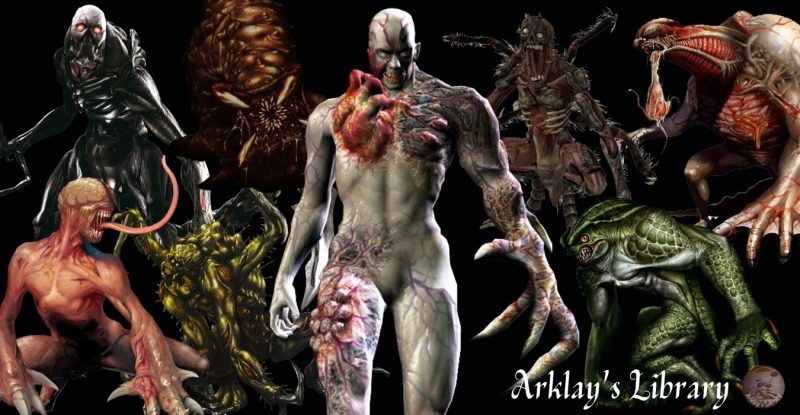
Umbrella’s antinatural creatures.
However, cheating death is still a theme present in Resident Evil, as Spencer himself started to worry about his finitude when he began to lose his health and age. This led him to insist on Alex Wesker to find a way to achieve eternal life. And while this is not explicit in Frankenstein, death is also a motivating factor for Victor’s insane research, as he’s constantly haunted by his mother’s death: it’s basically Mother Miranda’s situation regarding her dead daughter Eva, if we invert it.
And as far as creatures are concerned, the first being we associate with Frankenstein’s creature is certainly the Tyrant series. Created by mixing human subjects with other organisms and with technological devices, these monsters closely resemble the bulky, beyond-human figure of Frankenstein’s Creature, but without its self-awareness.
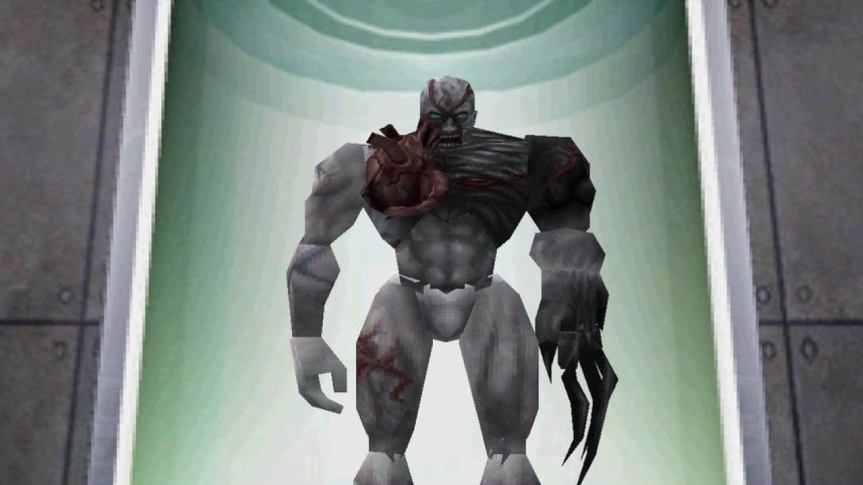
The creation of monsters, however, has side effects. The creature does not necessarily salute the creator. In the original Resident Evil 1, long before Capcom thought about making the Tyrant attack a plan of Wesker’s, the “ultimate life form” he glorified so much turns against him immediately; Birkin didn’t have the control he thought he would have over the G; Miranda creates dozens of aberrations instead of resurrecting Eva; the T-virus has leaked on several occasions, killing researchers and decimating an entire city. The violation of nature, therefore, has a high price to pay
The true monsters
Victor Frankenstein saw himself as a being isolated from nature because he was human. He thought he could dominate it and control it as if he were a God. But if monotheistic religions see God as a father, Victor did not know how to fulfill this role. He abandoned his Creature to its own devices, never accepting that the being he had brought to life could be worthy of empathy, with himself to blame for the Creature’s terrifying appearance. And then the new being went on to kill those that Victor loved in revenge.
What separates Resident Evil scientists from Frankenstein, in the end, is that most of them don’t abandon their opus. Spencer dies believing in his obsession despite all the harm he’s caused; Alexia takes full advantage of the power T-Veronica gave her; Wesker believed in the Tyrant’s beauty and followed in Spencer’s footsteps to the end; James Marcus’ obsession with the leeches was so strong that he treated them as his own children; among other madnessess. All of them, however, were destroyed by their own creations or by not letting go of them.
By playing God, Victor, Spencer, Wesker and others who created monstrosities became the monsters themselves. This was the lesson that Mary Shelley left us, one that Resident Evil makes a point of reminding.
References:
- GOMES, Anderson Soares. A ciência monstruosa em Frankenstein: aspectos do pós-humano. In Gragoatá. Niterói: Universidade Federal Rural do Rio de Janeiro, vol.23, n.47, p.848-872, set-dez 2018. Disponível em: https://periodicos.uff.br/gragoata/article/view/33606 Acesso de 27 de janeiro de 2021.
- MELLOR, Anne K. “A feminist critique of science”, In One Culture: Essays in Science and Literature. LEVINE, George; RAUCH, Alan (Orgs). Madison: University of Wisconsin Press, 1987.
- MELLOR, Anne K. Mary Shelley: Her Life, Her Fiction, Her Monsters. New York: Routledge, 1989.
- SHELLEY, Mary Wollstonecraft (1831). Frankenstein ou o Prometeu Moderno. Rio de Janeiro: DarkSide Books, 2017.
Reading suggestions (only in Portuguese):
- LEITURAS XENÓLOGAS | Frankenstein ou O Prometeu Moderno I: Uma Crítica Romântica ao Romantismo https://txtmagazine.com.br/leituras-xenologas-frankenstein-ou-o-prometeu-moderno-i-uma-critica-romantica-ao-romantismo/
- LEITURAS XENÓLOGAS | Frankenstein ou O Prometeu Moderno II: A Visão do Outro https://txtmagazine.com.br/leituras-xenologas-frankenstein-ou-o-prometeu-moderno-ii-a-visao-do-outro/

