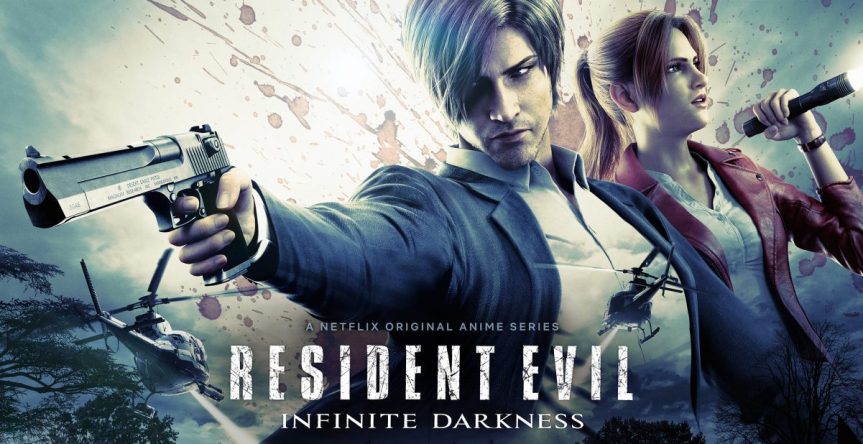
This text contains spoilers from Resident Evil: Infinite Darkness and is the first of a group of extensive analysis texts of the show.
Resident Evil: Infinite Darkness doesn’t seem to have been very well received by the fanbase. Although it looks like the majority of the audience liked it, my circle of friends and acquaintances sounds averse to the show or, even if they enjoyed it, they had a very negative view of it.
This took me by surprise, because even though this isn’t exactly a masterpiece, I watched it with a lot of excitement. I agree with most of the criticism, but I didn’t expect people to think it was so bad.
Anyway, I will make my initial notes about the series, and in the next texts we will make deeper analysis based on the historical references that it brought. Let’s go!
Fear and Darkness
In my speculation text about ID on EvilHazard (in Portuguese), I suggested that the darkness in the show’s name referred to fear and the inner darkness of people, and that this would be the central theme of the plot. This is indeed Jason’s central conflict, and he is also the figure around which the narrative is developed. He may seem not to make much sense, but he is a complex character that cannot be understood if we think in mere rational terms. His story reminds me a lot of Rambo, and I really liked that. I’ll talk more about him in the future.
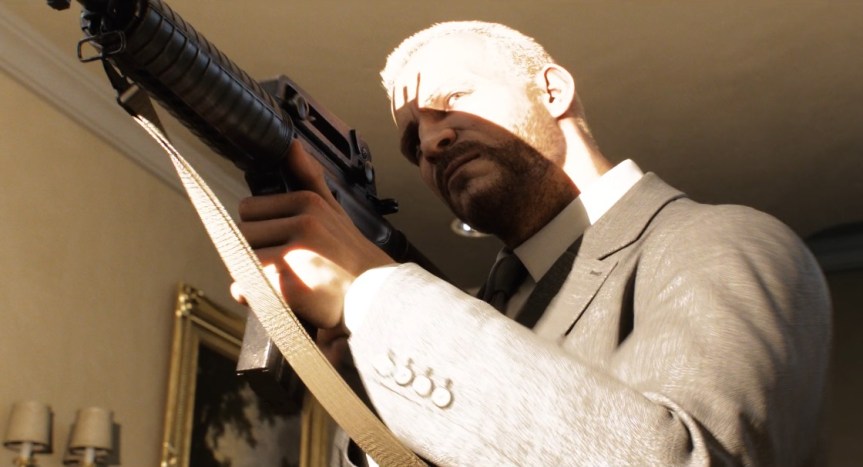
Just looking at the emphasis they put on Jason’s expression as he killed the zombies in the White House, I felt his mind wasn’t too healthy.
Characters
Although Claire has indeed received considerably less attention than Leon, I really enjoyed the detective role she played, and I really like the idea of her demonstrating this humanitarian side in the fight against bioterrorism. Moreover, I was glad to see that TerraSave doesn’t provide help only to victims of bioterrorism, as the NGO was already in Penamstan before Claire discovered the signs of an epidemic.
What made me really sad was that she got beaten up a lot. I’m forced to agree with the observation that the treatment that female characters have received in recent years in Resident Evil has left a lot to be desired, because besides Claire, Shen Mei also only existed in the series to suffer and die, without us even having seen her such skills as a computer scientist.
As for President Graham, I liked him. Maybe a little too nice for one occupying such office, but I think he represents well the attempt of a transition period between a government that blew up cities and one that wanted a better world (attempt that didn’t work out very well).
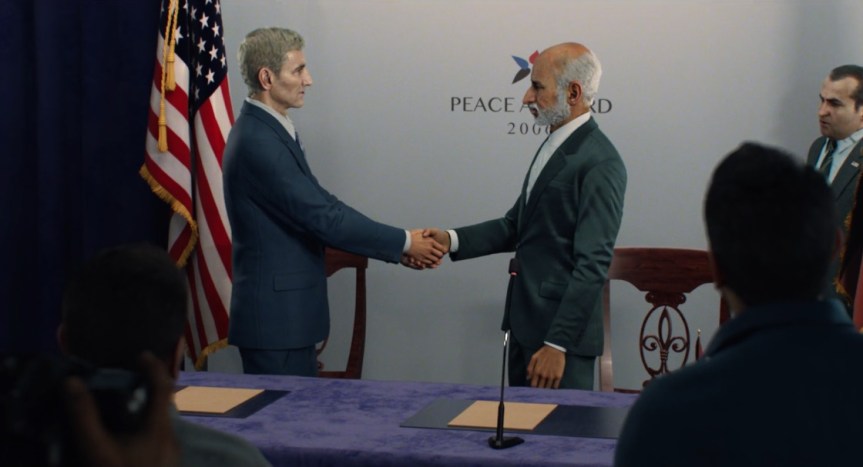
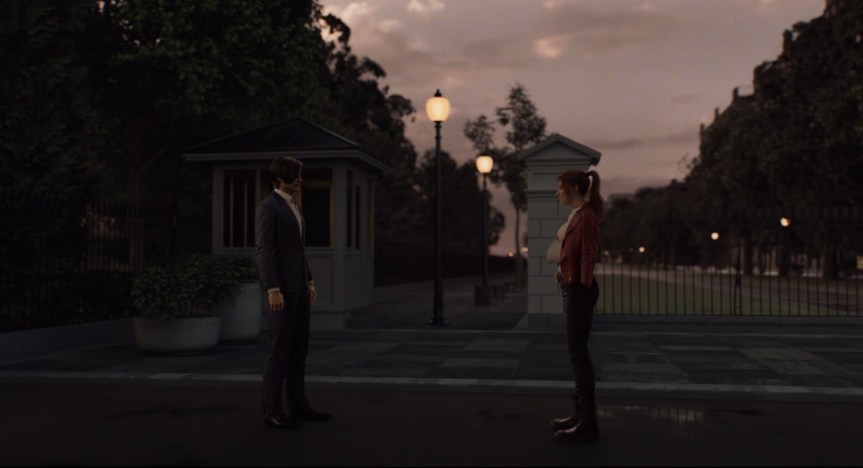
Perhaps it’s exactly these good intentions and personal connections that led Leon to refuse to publish the information from Shen Mei’s brother’s chip. Which is really dumb, as it had nothing to do with Graham and bioweapons were starting to become better known in 2006. And that ended up causing a conflict between him and Claire, and she was absolutely right to be angry at him.
I really liked this clash between Leon and Claire, because until then we had only seen them in harmony even though they followed quite different paths. Here, while Claire is a very realistic and practical person (Redfields’ thing), Leon is still stuck to his idealism, and this situation is consistent with the melancholy he starts to feel years later, because beyond his life having become a vicious circle, he must have seen the stupidity he did. I just hope that this disagreement is not forgotten by developers.
On the other hand, I must say that I found the series’ Leon pretty incoherent with the character’s moment in the chronology. ID takes place after the film Degeneration, in which we already see a much more mature and realistic Leon. If the order of the stories were reversed, there would be more sense in his stupid attitudes. And the condescending way he treats Claire is completely at odds with himself in the rest of the franchise. He wasn’t convincing at all.
Duration as a limiting factor
I’m 90% sure that Infinite Darkness was a film that was half finished and that when the opportunity to publish it on Netflix arose, Capcom split the material into four parts. Being so short, the series doesn’t develop several plot issues adequately. This made ID seem much more superficial than I interpreted it to be, and this compromised the quality of the work.
On the one hand, I think it’s good to have certain objectivity, but on the other, sometimes unnecessary things (like Leon doing pirouettes) get more attention than deepening the plot and characters.
Relationship with the rest of the franchise
Infinite Darkness brings a very closed in itself story, as usual in RE animations. But while the others (with the exception of Vendetta) served as a prelude to the numbered games, ID takes place much further back in time, between RE4 and RE5 and the same year as Lost in Nightmares (and apparently before it). This is good to the extent that the conflict is solved (at least partially), but Resident Evil fans don’t live only out of easter eggs.
The great missed opportunity regarding this, in my view, was not having made a connection between RE7 and the Village. As the series takes place in 2006, it would be an excellent time to show the refoundation of Umbrella (which took place in 2007). While it was more or less clear that the company Wilson was involved with was Tricell, I had a glimmer of hope that Blue Umbrella would still show up. And I also consider a sin that we didn’t see Adam Benford, nor Ingrid Hunnigan, people always close to Leon, nor Derek Simmons, a constant vulture of central government decisions.
And one thing decidedly wide-open is that Infinite Darkness is a retelling of Resident Evil: Degeneration. We have a deranged male character who turns into a monster (Jason/Curtis), a woman connected to him who hangs out with Leon (Shen Mei/Angela), this woman’s family house burns down, we have a guy who underestimates Leon (Patrick/Greg), then Leon and Claire end up in a laboratory very similar to WilPharma’s, and Claire basically repeats her participation in Degeneration in the final part while Leon hangs 4839615 times, demonstrating the importance of his pull up bar workouts at the gym.
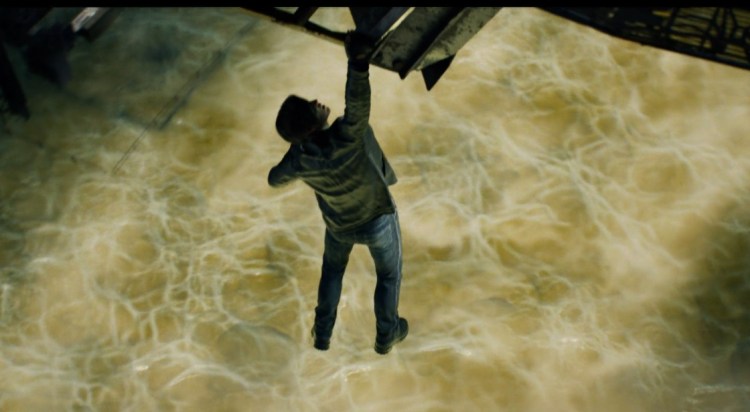
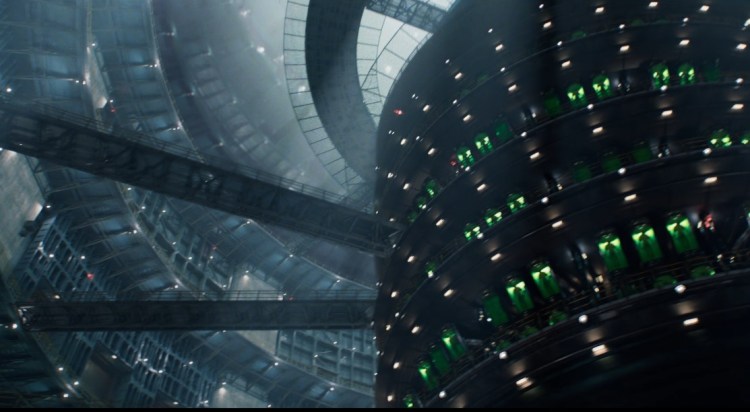
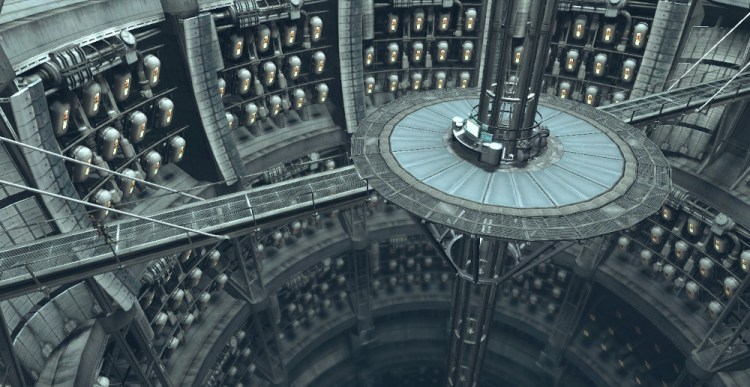
I don’t necessarily think that being a retelling is a problem, especially in the case of Jason and Shen Mei’s background, which are very different from Curtis and Angela’s. But in the final sequence this impoverished the narrative. On the other hand, it wasn’t a very long battle, which I thought was good. It seems that just as RE7 rescued RE1 and Village rescued RE4, Infinite Darkness tried to rescue Degeneration betting on a formula that was successful in its time.
Verdict
Despite its weaknesses and poor reception, I honestly liked Resident Evil: Infnite Darkness. Maybe because I was looking for a specific thing I did find, which was a governmental conspiracy that as a bonus came full of historical references that will be covered in the next texts (I didn’t even mention Wilson because he will get a text just for him). I confess that the rest, for me, was the least.
Of course, I would have liked to have seen more connections to the rest of the lore and better new and old characters development, but it was a product that I found very pleasant to watch.
Finally, wait for the historical analysis that we will do throughout July. Maybe they add something good to the Infinite Darkness?

