
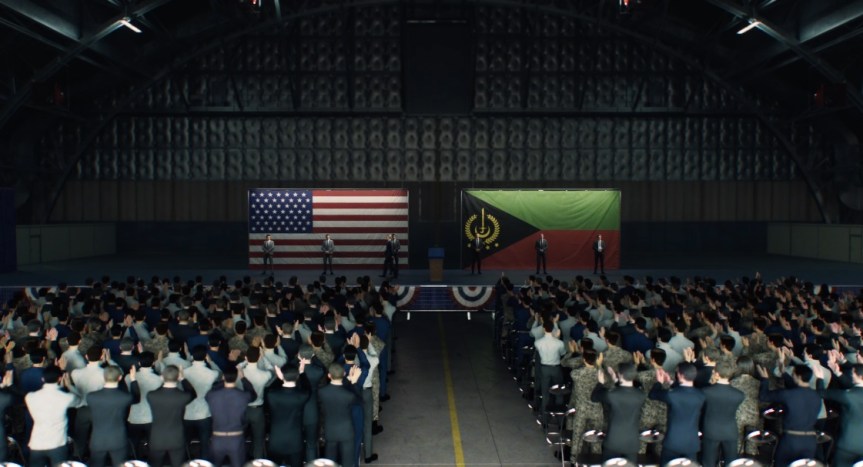
This text contains spoilers from Resident Evil: Infinite Darkness.
Resident Evil: Infinite Darkness’ plot has a wide variety of historical references and not exactly subtle political parallels from real life. Even though these elements have been explored superficially by the final product, I believe it’s much enriching to explore them in order to deepen what the show itself didn’t.
This is a text with sensitive themes that may possibly generate controversy, but debate here must be done with respect both to the debaters and to the groups being discussed. Any comments demonstrating prejudice against Arabs, Afghans, Chinese, Muslims or any other cultural group will be summarily deleted.
Penamstan and…Afghanistan?
Penamstan is a fictional country clearly located on the borders of the Middle East and Central Asia. This is evident by a multitude of factors, such as the name “-stan” and the looks of its cities, which clearly refer to a common urban organization in this part of the world.
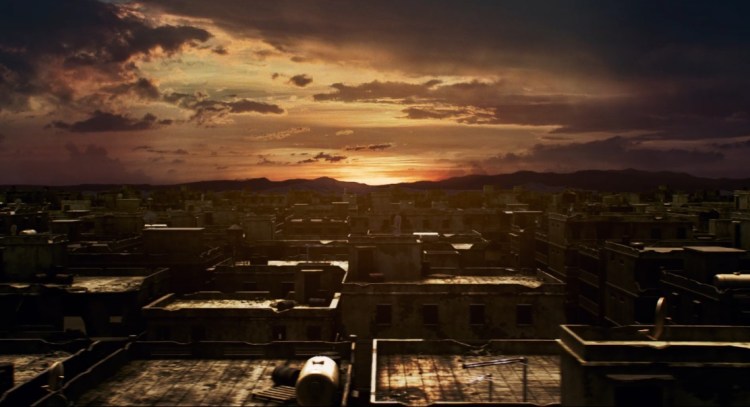
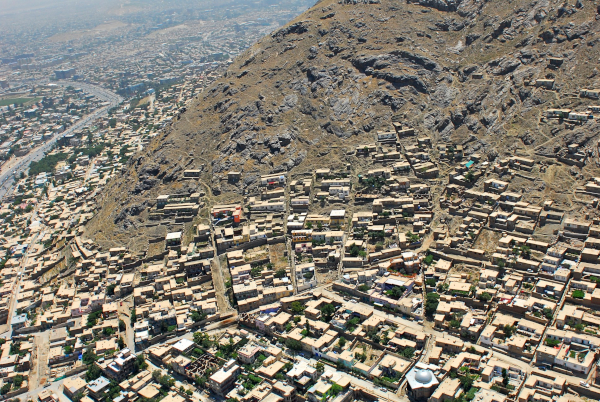
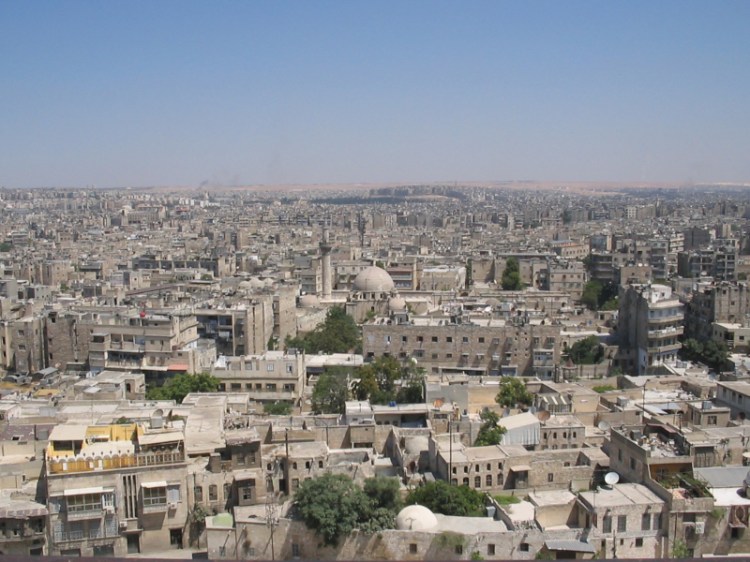
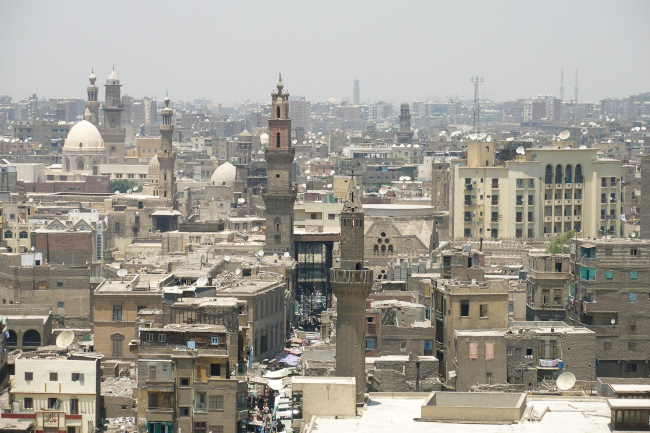
Penamstan in Infinite Darkness, Kabul in Afghanistan, Aleppo in Syria, Cairo in Egypt. Images from WikiCommons.
Even Penamstan’s national flag is similar to those of several Middle Eastern countries. The colours green, black and red are often seen on the flags of countries linked to pan-Arabism and also of many non-Arab Muslim countries (such as Iran and Afghanistan), though the meanings of the colours vary from one country to another. We also see a triangle common to Arab countries and an emblem which is usually some national symbol or a dynastic crest.
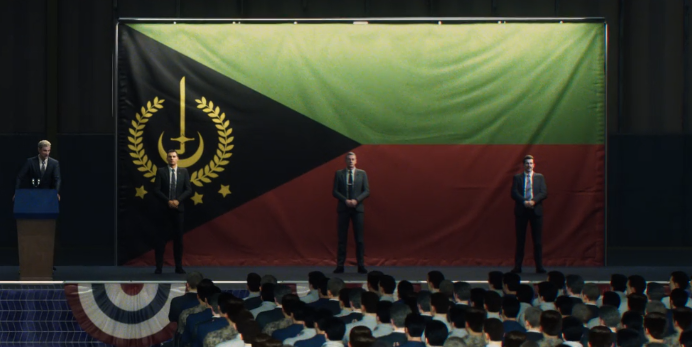
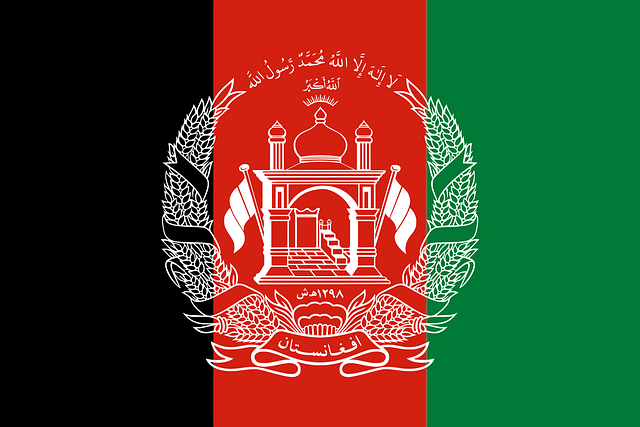
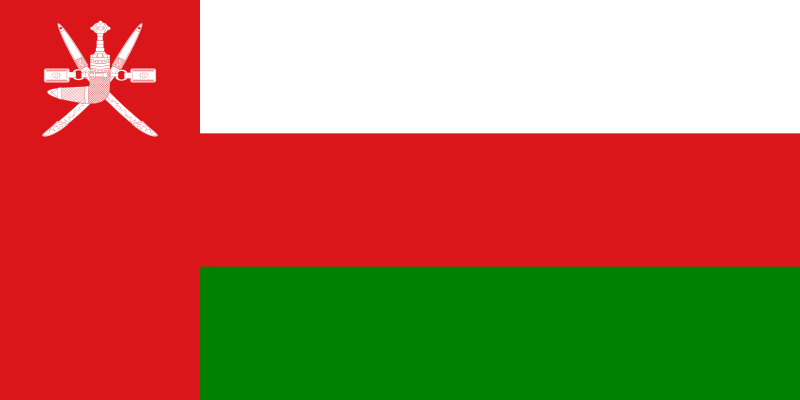
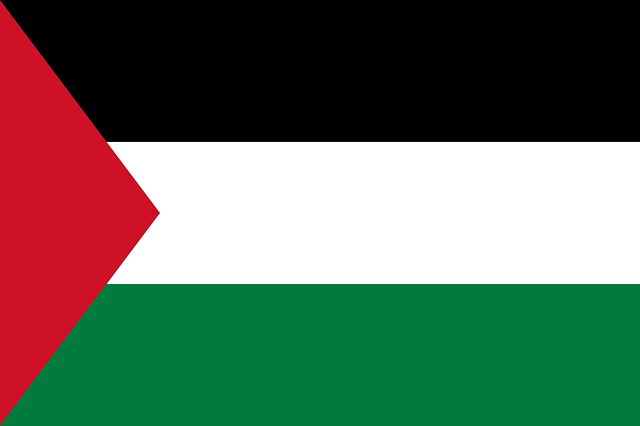
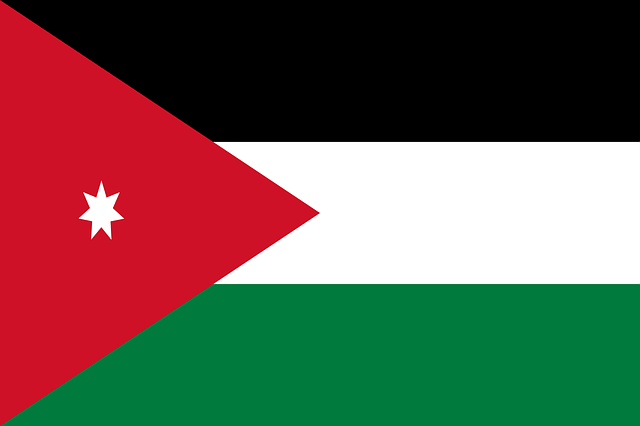
Flags in order: 1) Penamstan 2) Current for Afghanistan 3) Oman 4) Palestine 5) Jordan
But what is even more evident is that Infinite Darkness clearly shows where Penamistan is on the map:
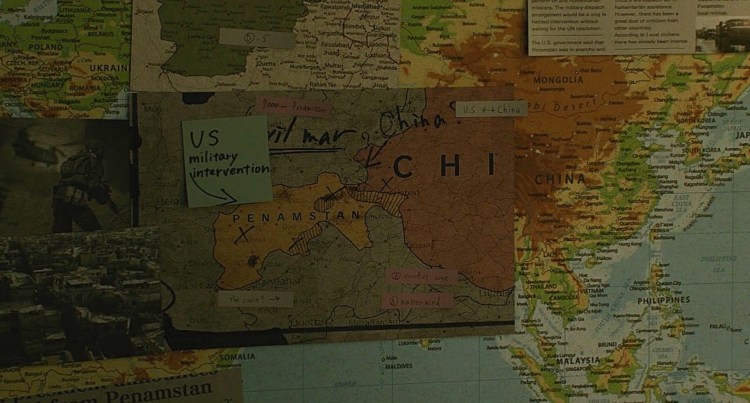
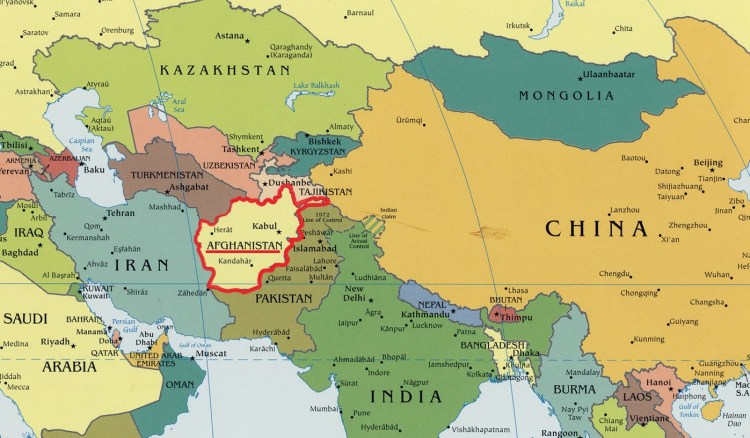
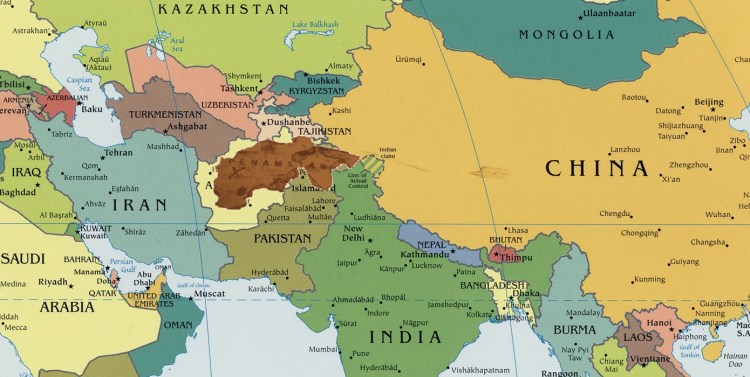
Besides bordering China, Wilson’s big target, Penamstan is located in a region of Central Asia that in real life corresponds mainly to Afghanistan’s territory.
We must take into account that the Civil War in Penamstan around which the events of the series unfold took place in 2000. This sets it very close to the September 11th, 2001 attacks and its consequences, more specifically, the intervention of the United States in Afghanistan and the Iraq War (2003-2011), whose results led to local instabilities similar to those in Penamstan.
Some historical context
Both the Iraq War and the intervention in Afghanistan were a kind of response to 9/11 by the George W. Bush administration. In both cases, in addition to retaliation, there was a speech of “bringing democracy” to these places, as we see one of the debaters saying about Penamstan in a video that Claire watches during her investigation. It is worth noting that the series did not address the issue of religion, focusing on political and economic instability.
The first was Afghanistan, where Osama bin Laden, leader of the terrorist organization al-Qaeda that carried out the attacks on World Trade Center and the Pentagon, would be headquartered. The US gained great international support for this endeavour, including from other Muslim countries that probably feared being labelled with the new stereotype of the “Islamic terrorist” built at that time, and from the very Afghan population that wanted to get rid of the fundamentalist group Taliban that dominated the country.
With Iraq, however, things were a little different. The US accused the country of being an ally of al-Qaeda and of possessing weapons of mass destruction, therefore, of being a threat to the world. However, most of the international community and the United Nations were against the Iraq War, as they considered the accusations unfounded. And they indeed were. Today, in general, Americans consider that the operation was a mistake.
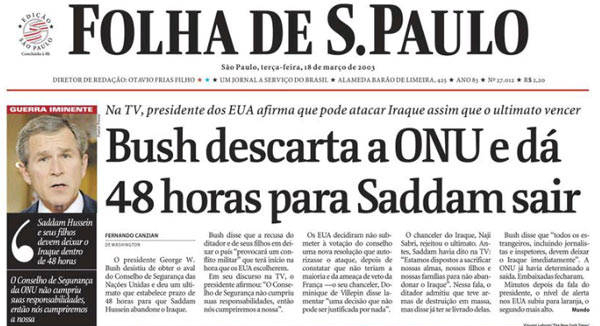
“Bush discards UN and gives Saddam 48h to leave”. Headline from Brazilian newspaper Folha de São Paulo on March 18, 2003, three days before the start of the Iraq War. It demonstrates the flare-up atmosphere of the period and the aggressiveness of George W. Bush’s foreign policy after 9/11.
The thing is that Afghanistan and Iraq were completely destroyed after the US military interventions and never recovered. Even today, there are huge difficulties in rebuilding the local economy and political stability. American troops stayed in Iraq until 2011 and only now in 2021 are withdrawing from Afghanistan, hearing numerous sceptical opinions about their intentions in these now fragile countries.
Returning to Resident Evil, what happened in Penamstan was a civil war, internal to the country. According to Claire’s investigation, before the UN reached a solution, the United States sent its troops, and this was interpreted by the local militia (one side of the war, the other probably being the Penamstam government) as an invasion.
This is not simple paranoia, because several countries in Africa and Asia have undergone violent colonization by European countries, and the American military presence often brings the fear of a colonial return to the surface.
Wilson sent his troops to Penamstan in 2000 to test his new bioweapon and its inhibitor. As in real life, the presence of the US military in the fictitious country also received a lot of criticism, including from US allies:
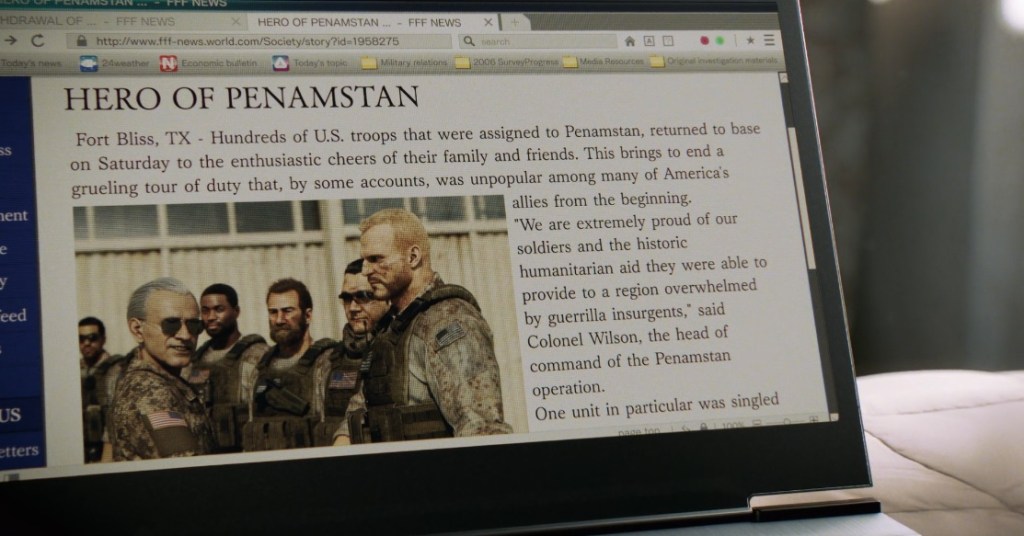
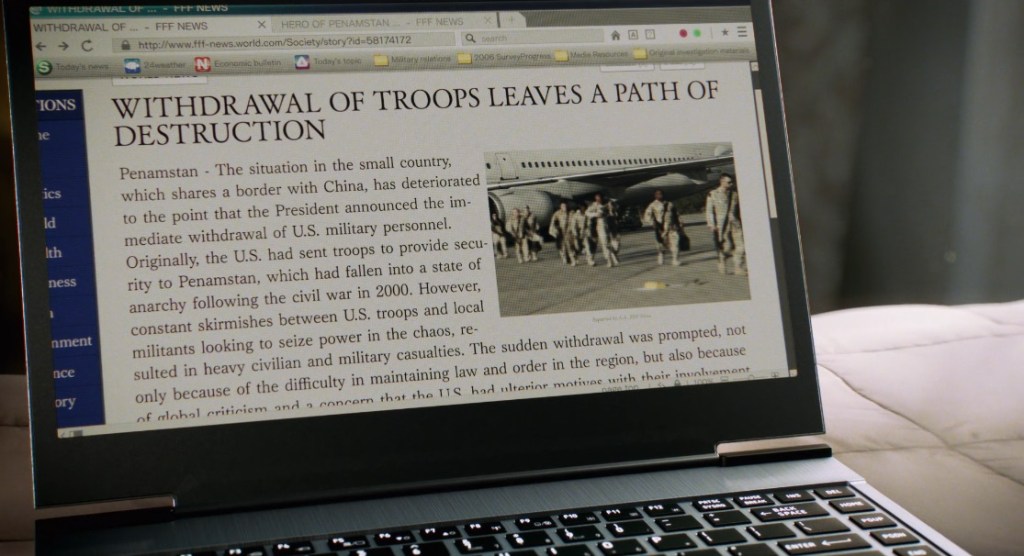
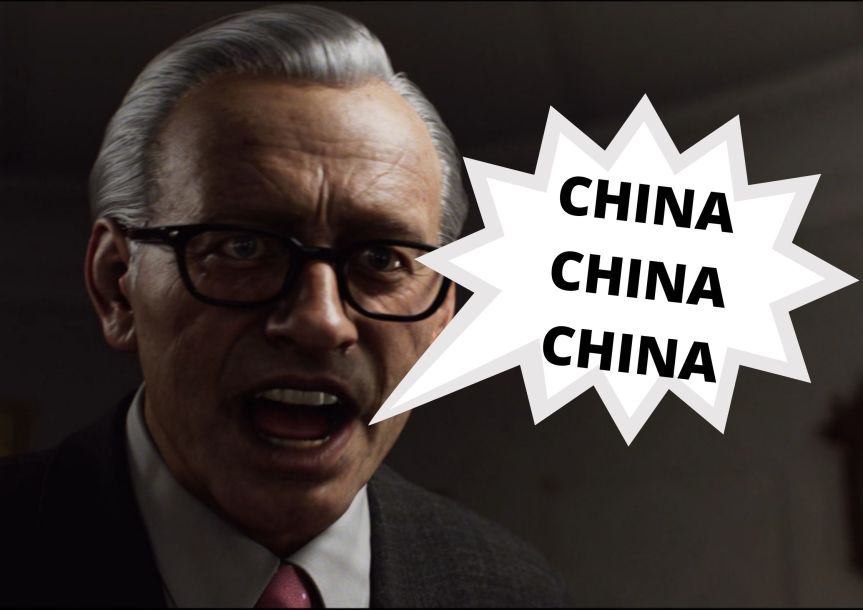
In 2006, Wilson wants to send troops to Penamstan again, through the alliance he wants President Graham to make with the country. And, once again, all those who seem to think a little reasonably frowns upon the idea, as everybody knows about Wilson’s inflamed desire to press for a war with China and how dominating Penamstan would be a way to do it.
We also have the economic issue to consider. Wilson reveals that he wanted to bring biological chaos to Penamstan to sell his inhibitor there, taking advantage of the vulnerability left by the civil war and his own previous actions in the country. In real life, the economic issue most mentioned by critics of the US interest in the Middle East concerns the region’s large oil reserves and the expansion of American economic influence.
China
In the real world, Iraq and Iran were contrary to the US intervention in Afghanistan for they considered that the US actually wanted to create military bases there more than fight terrorism. The region is close to Russia (let us remember that the USSR had fallen only 10 years before) and also to US allies such as Pakistan, Israel and Saudi Arabia. This was not an unjustified fear, as both Iraq and Iran had already been allies of the US in the past and were somewhat aware of the kind of interest there might be in such an intervention.
And how does China relate to this? I’ve already mentioned that in Resident Evil Penamstan is on the Chinese border. Wilson wished to place troops in the country precisely to gain easy access to China in a possible conflict he was inciting within the US government.
China’s growth had been precisely one of the reasons why the US had rejected the 1972 Biological and Toxin Weapons Convention in the RE universe, in order to arm itself against a threat to its hegemony, and for me this was fit pretty interestingly in the lore.
And, of course, in the real world we are living a time when the relationship between China and the United States is indeed aggravating, especially after the emergence of the coronavirus. Back in 2004, British historian Eric Hobsbawm had already suggested that a possible cause for a new global war could be “resulting from the United States’ unwillingness to accept the emergence of China as a rival superpower” [translated from the Portuguese translation, p.44. I did not find the original text in English]. Wilson took this very seriously.
So I suppose part of the controversy over real-life politics in Infinite Darkness comes from this. It seems that, somehow, Resident Evil decided to incorporate into its already traditional anti-war speech a message like “if you’re going to mess with China, do it diplomatically and not through war, dumbasses.”
Oh, and just an easter egg: every time I saw Wilson having a tantrum because of China, I could only think of this video (and the show was probably produced during Donald Trump’s presidency):
Conclusions
With so many parallels, one can understand why Netflix didn’t want reviewers to talk about politics, right? I confess that even I was afraid to address these very delicate issues of our recent history here, since the internet is full of crazy people. But this is also an opportunity to learn once more from Resident Evil.
Despite its superficiality, Infinite Darkness was concerned with incredible details, such as a credible flag for Penamstan and parallels with so many real events that for the sake of space and focus I can’t even cover all the possibilities, such as inspiration in more current conflicts like in Syria. It’s a shame that such a rich background was hazed over by a bad execution, because its premise was great and that’s what made me like the show, despite its problems.
In the next text, we will continue to analyse Resident Evil: Infinite Darkness and our theme will be war traumas. Be there!
References:
- HOBSBAWM, Eric. Globalização, hegemonia e terrorismo. São Paulo: Companhia das Letras, 2007.
- Irã, Iraque, Síria, EUA, Rússia: a história de lealdades e rivalidades que explica a crise atual. BBC Brasil. https://www.bbc.com/portuguese/internacional-51029316 Access July 13th 2021.
- MOREIRA JUNIOR, Hermes. O Governo George W. Bush e sua Guerra Contra o Terror: A nova orientação tática à estratégia norte-americana. 2011. 168 f. Dissertação de Mestrado em Ciências Sociais, Linha de Relações Internacionais, Universidade Estadual Paulista, Marília, 2011.
- Onze de setembro | Nerdologia https://www.youtube.com/watch?v=ul7qtxAMwNI Access July 14th 2021.
- PELLEGRINI, Ramon Trindade. MARTA, Felipe Eduardo Ferreira. “Memórias do 11 de setembro de 2001: o discursos de Bush e o prenúncio da invasão do Afeganistão”. In Revista Cenas Educacionais. Caetité, Bahia, v.3m n.e8246, p.1-28, 2020.
- SIMÕES, Edson Emanoel; PERILLO, Eduardo B. F.; MIGUEL, Jair Diniz Miguel. “Indústria e militarismo”. In COGGIOLA, Osvaldo (Org.). Dinâmica da Economia Mundial Contemporânea. São Paulo: Stortecci, 2003.


Dude! This is Czech republic flag and Penam Is part of Agrofert company which own our corrupted prime minister !!! 😁
CurtirCurtir
What you say makes sense, but a mystery that remains is: what on Earth could they mean by mixing this with several clear characteristics from the Middle Eastern conflicts? xD
CurtirCurtir